


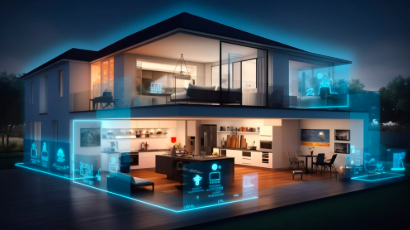
Smart homes are rapidly transforming the way people live, bringing convenience, efficiency, and control to everyday life. With the help of connected devices and automation, homeowners can manage lighting, security, appliances, and more—all from their smartphones or voice assistants. This article explores what smart homes are, how they work, and the key benefits and challenges they present.
What Is a Smart Home?
A smart home is a residence equipped with internet-connected devices that can be controlled remotely or automated to perform tasks. These devices communicate with each other through a central system or app, allowing seamless control.
Common Examples:
- Smart lights that adjust brightness automatically
- Smart thermostats that regulate temperature
- Voice assistants like Amazon Alexa and Google Nest
- Smart security cameras and doorbells
How Smart Homes Work
Smart homes rely on the Internet of Things (IoT), where devices are connected through the internet and can exchange data.
Basic Working Process:
- Devices are connected via Wi-Fi or Bluetooth
- A central app or hub controls all devices
- Users can set automation rules
- Devices respond based on commands or triggers
For example, lights can automatically turn on when you enter a room or adjust based on time of day.
Key Components of a Smart Home
Smart Devices
These include lights, thermostats, cameras, locks, and appliances that connect to the internet.
Smart Hub
A central system that connects and controls multiple devices.
Mobile Applications
Apps allow users to monitor and control devices remotely.
Voice Control Systems
Voice assistants enable hands-free control of smart devices.


Benefits of Smart Homes
Convenience
Smart homes make daily tasks easier by automating routine activities such as lighting and temperature control.
Energy Efficiency
Devices like smart thermostats help reduce energy consumption and lower utility bills.
Enhanced Security
Smart cameras, motion sensors, and door locks provide real-time monitoring and alerts.
Remote Access
Users can control their home from anywhere using a smartphone or tablet.
Customization
Automation allows personalized settings based on lifestyle and preferences.
Challenges of Smart Homes
Security Risks
Connected devices can be vulnerable to hacking if not properly secured.
High Initial Cost
Setting up a smart home system can be expensive.
Compatibility Issues
Not all devices work well together, especially if they are from different brands.
Internet Dependency
Smart homes rely heavily on a stable internet connection.
Privacy Concerns
Devices may collect personal data, raising concerns about how that data is used.
Real-Life Applications of Smart Homes
Smart home technology is used in various aspects of daily life.
Home Automation
Automating lighting, heating, and appliances for comfort and efficiency.
Home Security
Monitoring homes through cameras and smart locks.
Health Monitoring
Devices that track health metrics and assist elderly individuals.
Entertainment Systems
Smart TVs and speakers for seamless entertainment experiences.
Future of Smart Homes
Smart homes are expected to become even more advanced with new technologies.
Emerging Trends:
- Greater integration with artificial intelligence
- Improved device compatibility
- Enhanced security features
- More affordable smart devices
As technology evolves, smart homes will become more accessible and widely adopted.
FAQs About Smart Homes
1. What is a smart home in simple terms?
A smart home uses internet-connected devices to automate and control household functions.
2. Are smart homes safe?
Smart homes can be safe if proper security measures like strong passwords and regular updates are used.
3. Do smart homes save money?
Yes, they can reduce energy costs through efficient use of electricity and automation.
4. Can smart home devices work without the internet?
Some devices may work locally, but most features require an internet connection.
5. Is it expensive to build a smart home?
The cost varies depending on the number and type of devices, but basic setups can be affordable.
Conclusion
The rise of smart homes marks a significant shift in modern living. By combining convenience, energy efficiency, and enhanced security, smart home technology offers numerous benefits. However, challenges such as privacy concerns, costs, and security risks must also be considered. As innovation continues, smart homes are likely to become a standard part of everyday life, making homes more intelligent, efficient, and connected.


